6 months Your baby
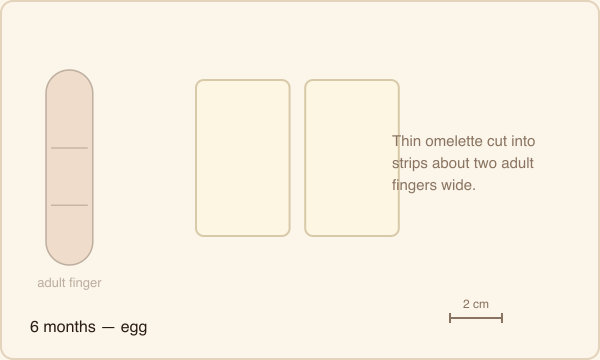
Make a thin omelette and cut it into strips about two adult fingers wide. Hard-boiled egg works too — offer a quarter of the white with the yolk mashed onto it, so it is less dry.
Yes — from 6 months
Yes, babies can eat egg from around 6 months, and current guidance is to introduce it early rather than delay it. Egg is one of the nine common allergens, so offer it at home, earlier in the day, and on its own the first time. Always serve it fully cooked.
Cook until both white and yolk are firm.
Make a thin omelette and cut it into strips about two adult fingers wide. Hard-boiled egg works too — offer a quarter of the white with the yolk mashed onto it, so it is less dry.
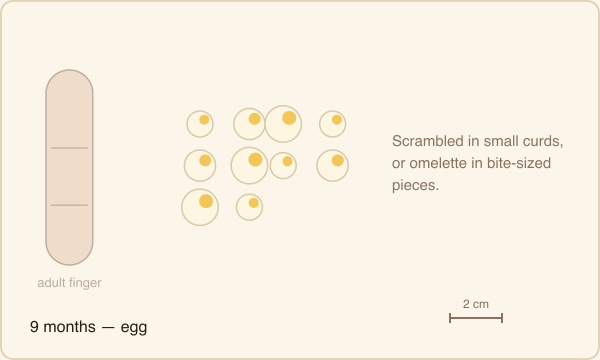
Scrambled egg in small curds, or omelette cut into bite-sized pieces for pincer practice.
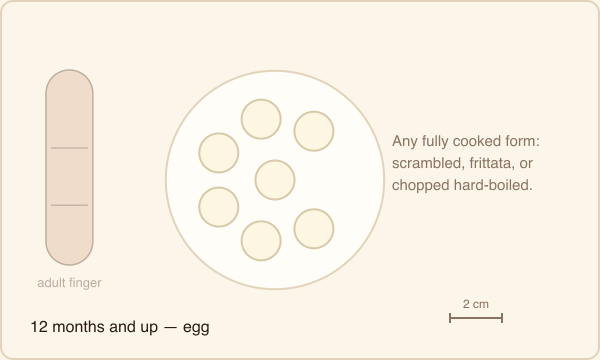
Any fully cooked form the family eats: scrambled, omelette, frittata, or chopped hard-boiled egg.
Cooked egg is soft and poses little choking risk when cut appropriately. Keep omelette strips wide and flat rather than cut into small cubes for a 6 month old, so your baby grips rather than stuffs.
Egg is a common childhood allergen. Introduce it when your baby is well, early in the day, and without other new foods alongside, so a reaction is easy to attribute. Start with a small amount on the first day and increase over the following days if all is well. Once egg is established, keep offering it regularly — ongoing exposure is part of what maintains tolerance. If your baby has severe eczema or an existing food allergy, talk to your pediatrician before introducing egg.
Egg used to be a food parents were told to hold back. That advice changed: introducing egg and other common allergens from around 6 months, and keeping them in the diet, is now what major guidelines recommend.
The practical version is simple. Cook an omelette, cut it into wide strips, and offer one on a morning when you are not rushing out of the house.
From around 6 months, at the point solids start. Guidance in the US and UK is to introduce common allergens early rather than delaying them.
Cook eggs until both the white and the yolk are firm. In the UK, eggs carrying the British Lion mark are considered safe for babies when runny, but fully cooked is the simpler rule.
Yes, regular exposure is helpful once egg is established. Vary the protein sources across the week so your baby meets a range of foods.
Most often hives, swelling around the mouth, vomiting or a rash within two hours. Stop offering egg and speak to your doctor. Call emergency services immediately for any breathing difficulty, floppiness or swelling of the tongue or throat.
Medically reviewed by Melissa A Barry, Registered Dietitian Nutritionist (RD, RDN) — last reviewed . See our editorial and review policy. Verify this credential